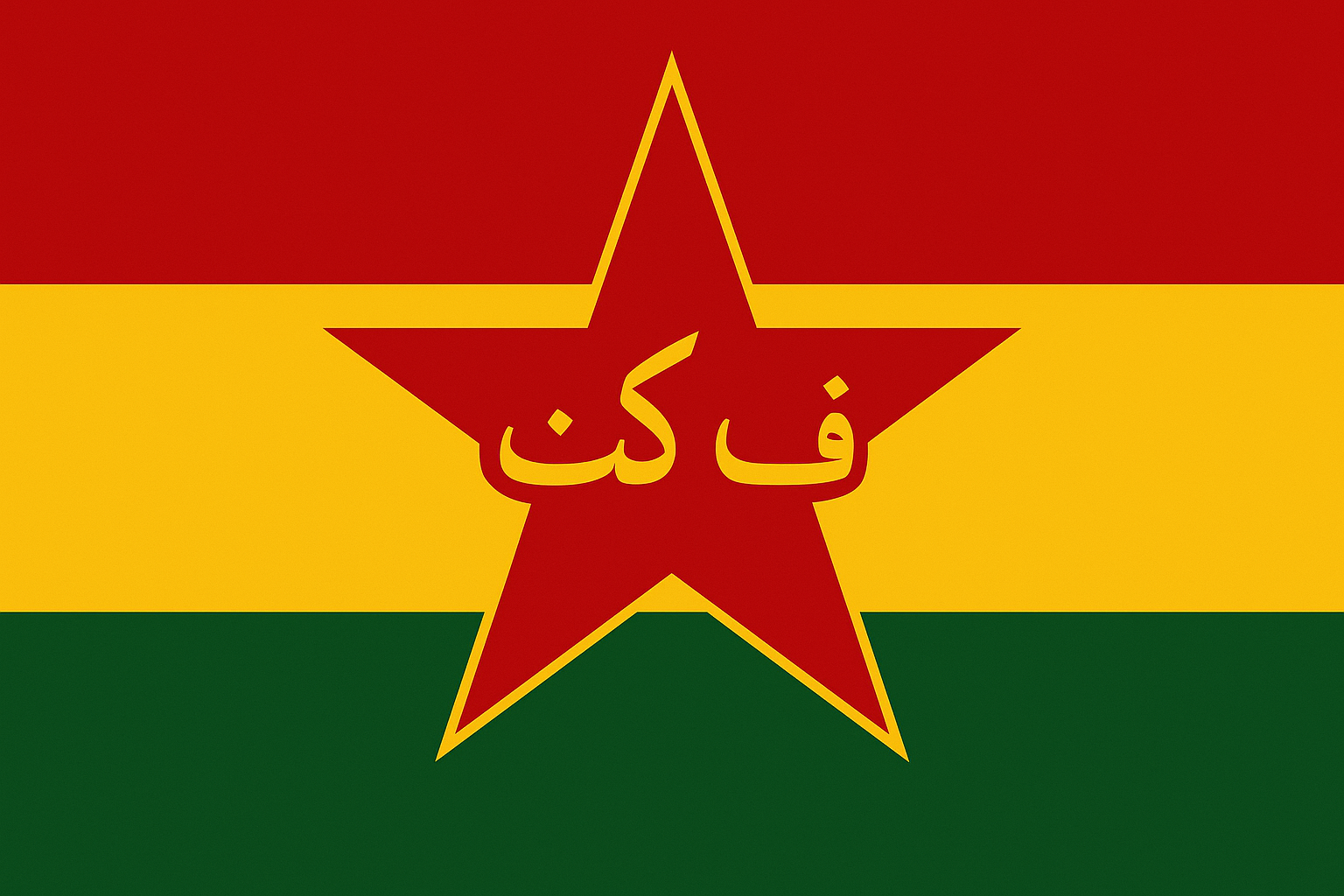
Classification: NEUTRAL - Non-State Armed Group
Type: Ethnic Self-Defense Force / Proto-State Military
Founded: 2011 (formalized from earlier militias)
Area of Operations: Northern and Northeastern Hauran
Estimated Strength: 35,000-45,000 fighters (including women’s units)
Leadership: General Mazloum Kobani (Commander-in-Chief)
Political Wing: Democratic Union Movement
Ideology: Democratic Confederalism / Kurdish Autonomy
Status: ACTIVE - Expanding territorial control
Date Updated: December 2013
¶ Executive Summary
The Kurdish People’s Defense Forces (PDF) emerged from decades of underground organization when the Haurani state began collapsing in 2011. Initially focused on protecting Kurdish areas from both government forces and Arab opposition groups, the PDF has evolved into the most disciplined and effective fighting force in northern Hauran. By late 2013, they control most Kurdish-majority areas and are expanding into mixed regions abandoned by government forces.
Unlike other factions, the PDF pursues neither regime change nor religious extremism, instead focusing on establishing autonomous self-governance in Kurdish regions while maintaining pragmatic neutrality between government and opposition forces.
¶ Key Characteristics
- Gender Integration: 35% female fighters in separate women’s units
- Discipline: Strict military hierarchy, no looting policy
- Ideology: Secular, democratic, ecological society
- Languages: Kurdish (Kurmanji), Arabic, Assyrian
- Foreign Support: Limited - some diaspora funding
- Recruitment: Voluntary service, increasing conscription
- General Command: 9-member council (elected)
- Regional Commands: 4 sectors (Kobani, Qamishli, Afrin, Hasakah)
- Brigade Structure: 7 infantry brigades, 2-3 armored battalions
- Armored Battalions: 30-35 T-55 tanks each (crew training ongoing)
- Air Defense Battalions: 2 battalions organized in platoons
- ZSU-23-2 platoons: 4-5 vehicles each
- ZSU-23-4 Shilka platoons: 3-4 vehicles each
- Infantry Battalion (Tabur): 300-500 fighters
- Company (Bölük): 80-120 fighters
- Platoon (Takım): 25-35 fighters
- Squad (Manga): 8-12 fighters
- People’s Councils: Local governance in liberated areas
- Asayish (Security): 10,000 personnel - police functions
- Economic Committees: Resource distribution, taxation
- Education Committees: Kurdish language schools
- Health Committees: Operating captured hospitals
- Defense Committees: Civilian militia training
¶ Organizational Philosophy
Democratic Confederalism:
- Bottom-up decision making
- Gender equality mandate
- Multi-ethnic inclusion
- Ecological sustainability
- Rejection of nation-state model
Military Doctrine:
- Defensive positioning with offensive capabilities
- Guerrilla heritage adapted to conventional warfare
- Emphasis on fortification and urban defense
- Night operations specialization
¶ Defensive Operations
-
Canton Defense Strategy
- Fortified defensive lines around Kurdish areas
- Extensive tunnel networks in urban areas
- Pre-positioned supply caches
- Coordinated multi-canton response
-
Urban Warfare Excellence
- Building-to-building clearing operations
- Sniper-based area denial
- IED defensive barriers
- Civilian evacuation protocols
-
Air Defense Network
- ZSU-23-2s for checkpoint and urban defense
- Shilkas protecting key infrastructure
- Overlapping fields of fire over cantons
- Forcing government helicopters to higher altitudes
-
Border Control
- Preventing extremist infiltration
- Managing refugee flows
- Cross-border family connections maintained
- Smuggling revenue control
¶ Offensive Capabilities
Evolving Combined Arms: With 2-3 armored battalions of T-55s, PDF developing limited conventional warfare capability. Tank units primarily used for:
- Canton defense anchor points
- Breakthrough operations in urban fighting (Afrin/Al-Bab)
- Psychological impact against extremist technicals
Limitations: Fuel shortages and crew inexperience limit sustained armored operations. Tanks often used as mobile gun platforms rather than maneuver warfare.
¶ Equipment & Weapons
| Category | Types | Sources |
|---|---|---|
| Small Arms | AK-47, PKM, DShK, Dragunov | Captured, black market, hidden caches |
| Heavy Weapons | RPG-7, SPG-9, mortars | Captured government stocks |
| Vehicles | Technicals, captured BTRs/BMPs | Modified civilian, battlefield capture |
| Armor | T-55 tanks (~60-90 operational) | Captured from government depots |
| Air Defense | ZSU-23-2 (~40), ZSU-23-4 Shilka (~20) | Captured from abandoned bases |
| Artillery | D-30 howitzers, BM-21 Grad | Limited numbers from captured bases |
| Communications | Commercial radios, cellphones | Purchased, civilian networks |
¶ Area of Control
¶ Governance Model
Service Provision:
- Basic security and policing (most effective in Hauran)
- Food distribution system
- Fuel allocation committees
- Hospital and school operations
- Multi-language administration
Economic Management:
- Oil field control (small fields only)
- Agricultural coordination
- Border crossing revenues
- Cooperative enterprises
- Barter economy emergence
Social Contract:
- Protection for all ethnicities
- Women’s rights enforcement
- Religious freedom guaranteed
- Mandatory military service (starting 2013)
- Status: Active conflict in western regions, tacit non-aggression elsewhere
- Major Clashes:
- Afrin: Fighting for canton connection
- Al-Maidan: Urban warfare ongoing
- Azaz: Strategic border crossing battles
- Jendaires: Hill control operations
- Al-Bab: Key crossroads contested
- Eastern Areas: Joint checkpoints in Qamishli
- Strategy: Aggressive in west, pragmatic in east
- Free Haurani Army: Frequent clashes over territory
- Harakat al-Salasyl: Major battles in Hasakah region
- Fighting for control of oil infrastructure
- Ethnic cleansing concerns driving PDF mobilization
- Ras al-Ayn border battles intensifying
- Arab Tribes: Mixed - some cooperation, some conflict
- Tension Points: Resource competition, ethnic divisions
- Byzantauria: Hostile - border closed, Kurdish separatist concerns
- Northern Kurdish Region: Complicated - embargo but family ties
- Haurani Government: Pragmatic coexistence
- International: Limited recognition, humanitarian access
¶ Internal Cohesion
Strengths:
- Unified command structure
- Clear political vision
- High morale and discipline
- Popular support in Kurdish areas
Challenges:
- Resource limitations
- Geographic separation of cantons
- Conscription resistance
- Arab-Kurdish tensions in mixed areas
¶ Military Capabilities
Strengths:
- Superior unit discipline and cohesion
- Defensive warfare expertise
- Motivated by ethnic survival
- Gender integration doubles recruitment pool
- Effective intelligence in Kurdish areas
- Growing armored capability with captured T-55 battalions
- Air defense systems denying low-altitude operations
Weaknesses:
- Limited heavy weapons ammunition
- No high-altitude air defense
- Inexperienced tank/AA crews
- Maintenance challenges for Soviet-era systems
- Cannot project power beyond Kurdish areas
- Fuel shortages limiting mechanized operations
¶ Strategic Assessment
Expansion Potential: Moderate - will control all Kurdish-majority areas
Stability Factor: High - provides best governance in controlled areas
Long-term Viability: Dependent on regional acceptance of autonomy
Political: Creating facts on ground for future autonomy negotiations
Military: Most effective light infantry force, limited offensive capability
Economic: Subsistence economy, depends on oil and agriculture
Social: High legitimacy among Kurds, tensions with Arabs
Information: Effective local propaganda, limited international reach
Infrastructure: Maintaining basic services better than other areas
Physical Environment: Defensive terrain advantages in home regions
Time: Racing to consolidate before extremist groups expand
- Actual fighter numbers by canton
- Hidden weapon cache locations
- Extent of Kurdish Liberation Army veteran involvement
- Long-term political intentions
- Coordination with government forces
- Foreign training/support networks
¶ Western Front - Government Clashes
Afrin Canton Battles:
- Al-Maidan: Urban combat for district control
- Azaz Corridor: Attempting to break canton isolation
- Jendaires: Hill positions overlooking supply routes
- Al-Bab: Major crossroads preventing canton connection
PDF Strategy: Defensive positions while attempting to link Afrin with Kobani canton through contested corridors.
¶ Eastern Front - Extremist Threat
Hasakah Operations:
- Harakat al-Salasyl pushing into mixed Arab-Kurdish areas
- PDF mobilizing to protect Kurdish villages
- Oil field control battles intensifying
- Civilian displacement increasing
Critical Development: Two-front war emerging as PDF faces government forces in west while defending against Salasyl expansion in east. Resource strain becoming severe.